Rice
History
Rice has been cultivated in China since ancient times, spreading across the Eurasian continent and the entire world throughout its 12,000 year history of cultivation. In classical Chinese, the words for “agriculture” and “rice” are synonymous, indicating that rice was already the staple crop at the time the language was taking form. In several Asian languages, the words for “rice” and “food” are identical. Many ceremonies have arisen in connection with planting and harvesting rice, and the grain and the plant are traditional motifs in Eastern art. Thousands of rice varieties are now known, all of which are derived from the original ancient strain developed in the Yangtze Valley of China.
It has been estimated that half the world’s population subsists wholly or partially on rice. 92 percent of the world’s rice crop is grown and consumed in Asia, where the average person consumes approximately 200 to 400 lbs (90 to 181 kg) of rice annually. To compare, the average person in North America consumes about 25 lbs (11 kg) annually, although this amount has increased in recent years.
Rice is the only major cereal crop that is primarily consumed by humans directly as harvested, and only wheat and corn are produced in comparable quantity.
Healthy Diet
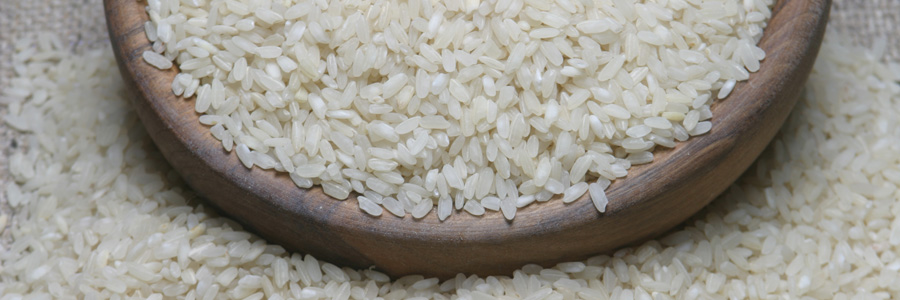
Rice is typically sold in either a “brown” or “white” form. Brown rice refers to grains which retain their outer brown coating, while white rice refers to grains that have had this coating milled away by peeling. Brown rice has a greater food value than white, as this outer brown coating contains important proteins and minerals (particularly folate, phosphorus and potassium); however, white rice can be stored for longer periods than brown.
As a food, rice is chiefly carbohydrate and is low in fat and protein as compared to other cereal grains. In the East, rice is eaten with foods and sauces made from soybeans, which supply the protein and vitamins that rice is deficient in. Elsewhere, especially in the United States, rice processing techniques have produced many different breakfast and snack foods for retail markets.